
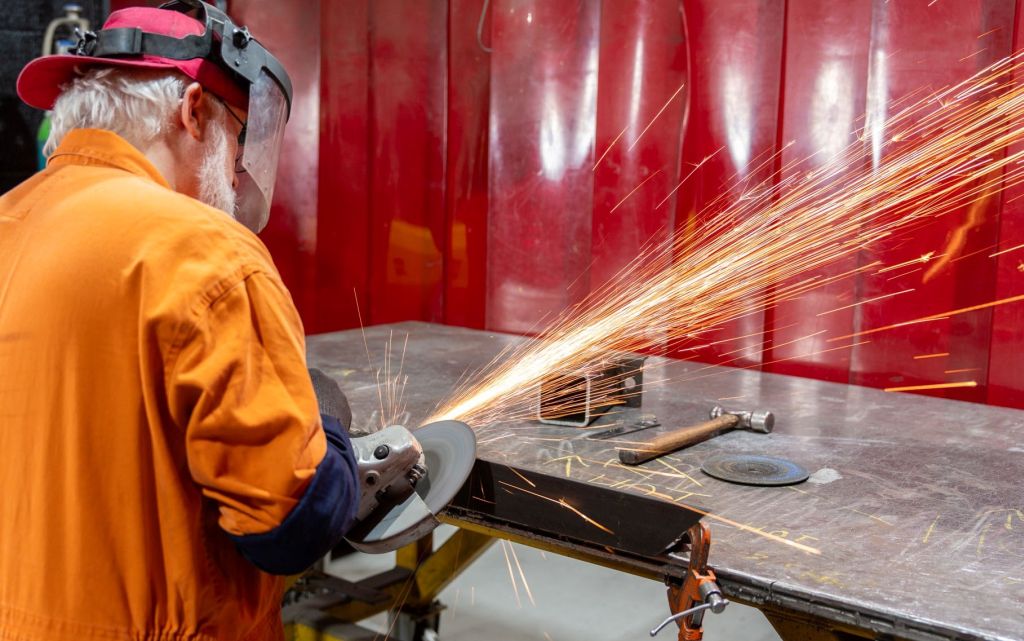
There are currently more than 75,000 people in prison in England and Wales. Many have valuable skills and work experience, which could be just what manufacturing is looking for. New Futures Network is a specialist part of HM Prison and Probation Service (HMPPS) which attracts and supports employers to work with prisons. National Lead for Manufacturing, Lance Harris, speaks to The Manufacturer.
Key takeaways:
- New Futures Network connects prisons with employers to help businesses fill job vacancies and prison leavers to find employment
- Many of the nations 75,000 prisoners have valuable skills and work experience which could serve the manufacturing sector
- Over 90% of businesses that employ ex-offenders agree they are motivated, reliable, good at their job and trustworthy
- Currently, 31% of prison leavers remain in sustained employment six months after release – more than double what it was three years’ ago
- New Futures Network works with around 200 commercial manufacturers who outsource into prison workshops

New Futures Network supports British manufacturers with production opportunities within the prison estate and connects companies with prison leavers to help meet their recruitment needs.
When a person is sentenced to a custodial term, he or she is given the chance to engage in education, vocational training and work. Work is a significant part of running effective and safe prisons as it gives prisoners the opportunity to enhance their confidence, skills and employability, reducing their likelihood of reoffending on release.
What does New Futures Network do?
New Futures Network works to support prison leavers to find employment through three primary initiatives.
Prison industries: The network supports commercial organisations to outsource production into prison industries which should be of interest to manufacturing. Examples include engineering, woodwork, textiles, injection moulding, printing, recycling and contract services. Some prisons also operate call centres.
Release on Temporary License (ROTL): The network supports the employment of people who are in open prisons, which means they’re eligible to work in the community on day release. This is a really good way for people to accumulate a track record of work, build positive relationships with an employer and save money for their release, which could be used as a deposit to rent a flat, for example.
Employment on release: New Futures Network finds employers who are interested in recruiting people when they leave prison and support prisoners into these jobs. Over 90% of businesses that employ ex-offenders agree they are motivated, reliable, good at their job and trustworthy, according to a survey by Kantar Public commissioned by the Ministry of Justice.
How do prison industries work?
Each day thousands of prisoners are at work in prisons, manufacturing products for the needs of the internal Prison Service and with any spare capacity, New Futures Network partner with commercial companies who outsource production into dedicated workshops.
The advantages include flexible capacity to meet fluctuating demands, relatively low production costs and the existing plant and equipment in prison workshops, which in most instances, mirror commercial industry. And because the network is based in the UK, reshoring is another tangible benefit.
Prisoners are supervised by experienced trade-served instructors who oversee the production and quality of goods by prisoners. New Futures Network selects the most appropriate prison workshop and work with the clients’ production specialists to agree what’s achievable for both parties.
The network’s customers and partners support the objectives of giving people a second chance. Almost 13 million people in the UK have a criminal record, so this is a large labour market to tap into. Outsourcing work into prison industries gives the country’s prisoners the chance to develop their skills and CVs, while helping organisations meet their production needs.
What is manufactured?
With a dynamic population and the need to provide products for prison needs, the prison network within the UK produces a wide variety of items. These range from cell furniture to garden furniture, clothing and bedding for 80,000 people, as well as printed materials like business cards and pop-up exhibition posters.
The engineering workshops even manufacture cell doors and bars. More simplistic, high-volume work such as electrical assembly, picking and packing, and recycling work is also valued very highly.
Which organisations work with New Futures Network?
The Timpson Group, a service retailer operating in Britain and Ireland, has hired hundreds of former prisoners over the years. Its Chief Executive, James Timpson, now known as Lord Timpson and serving as the Prisons & Probation Minister, is a prominent advocate for this initiative.
Other long-standing supporters of this practice include Greggs (a bakery chain), Cook (a frozen food retailer), Iceland (a supermarket chain), Halfords (a motoring and cycling retailer), DHL (a logistics and courier company), and Kier (a construction services company). Greene King, a pub retailer and brewer, is relatively new to this effort but has recently employed their 250th former prisoner.
The network also works with around 200 commercial manufacturers who outsource into prison workshops including LMB Supplies, Inpress Precision and Forest Gardens. Depending on the specific needs and requirements of commercial customers, the network determines the best approach for both parties. This process often starts with a visit to the prison, followed by a suggestion to conduct a pilot batch. This allows both sides to understand the logistics, perform a time study to establish pricing, and ideally reach an agreement to trade.
What are the benefits of hiring prison leavers for employers?
Many employers recognise the valuable skills that people in prison possess, and those who give prison leavers a second chance often find them to be highly committed employees. Increasingly, organisations are seeing the benefits, and success rates are improving month by month. Currently, 31% of prison leavers remain in sustained employment six months after release – more than double what it was three years’ ago – largely thanks to the pathways created by the network and its partners.
Securing employment and accommodation is crucial for preventing reoffending, reconnecting individuals with their families and communities, and addressing recruitment challenges across various sectors in the UK.
To facilitate this process for companies and prison leavers, the New Futures Network led a campaign to establish Prison Employment Leads in each resettlement prison (approximately 93 out of 115 in England and Wales). Their role is to match job descriptions with the right prisoner, at the right time, and with the right attributes. Since their appointment just over two years ago, success rates have increased dramatically, with more prison leavers leading positive lives with their families and turning away from criminality.
However, the network cannot achieve this alone and needs the support of British industry across all sectors.
How can manufacturers get involved?
For companies interested in outsourcing their manufacturing needs to prison industries, New Futures Network can collaborate in order to address the location of the individual business, security, capacity and capability requirements.
The work is highly structured and planned, adhering to the company’s specifications and samples. Services are priced according to trading conditions, formalising the work into a contract that allows both parties to negotiate and trade on a solid foundation.
Businesses are encouraged to visit appropriate prisons to view facilities and meet the network’s team – these visits can be organised by the network. Each prison has an industrial manager, head of education, skills and work, and specialist instructors along with the workforce. Most visitors are impressed by the setup and capabilities of the production facilities.
Opening the doors of the country’s prisons to the manufacturing sector to discuss potential achievements is crucial for helping people get their lives back on track and providing customers with valuable production and recruitment solutions.
For any manufacturers interested in partnering with New Futures Network to hire prison leavers or prisoners on temporary day release, the network’s central team and regional employment brokers are experts in understanding the needs of a business and matching them with the most appropriate prison.
Success stories
James Timpson, Chief Executive, Timpson: “We have 1,600 shops all over the UK and Ireland, and ten per cent of our colleagues have been recruited from prison which is something we’re very proud of.
“We also opened a Timpson Academy in Liverpool Prison as a way of training people before they’re released, so when they turn up working in our business, they’re trained and we already know them. They’ve got enthusiasm, and we know that they have the potential to be a great colleague.
“We may be going to prisons to recruit ex-offenders, but actually we are recruiting people; people who have a future.”
Andrew Sherwood, Human Resources Director, Bernard Matthews: “We have a long history of working in the community, and we feel that giving people an opportunity to restart their work lives is a really fantastic thing to do.
“It’s been really easy working with the prison. They’ve been really helpful, very supportive, and when we have come across any issues, they’ve done their best to resolve them.
“I would recommend working with exoffenders. Our experience has been that the people who have come to work with us have been loyal and hard working. Many of them have moved on to become machine minders or forklift drivers, and that’s a fantastic opportunity for them, and it’s great for us as well.”
Claire Coombs, Development Manager, Keltbray: “We employ ex-offenders because there’s a huge skills shortage within our industry, and it’s a really good way of finding new entrants into our business. In addition to that, we have responsibilities to employ within local communities so by recruiting prisoners it can have a positive impact on where they live.
“The ex-offenders we recruit are just like everyone else who we come across as an employer. They come with a variety of skills, and we ensure that they are then given the correct training.
“Over the last 18 months, we’ve had 11 individuals work for us who’ve previously offended; ten of those are still here. They’re all really strong individuals and are doing really well.”
For more articles like this, visit our People & Skills channel