
The relentless hum of machinery, the echo of metal striking metal, and the cacophony of industrial processes create an acoustic nightmare that extends far beyond mere annoyance. Poor acoustics in industrial environments don’t just assault the ears—they compromise worker safety, reduce productivity, and can lead to serious long-term health consequences. This has become a critical concern for facility managers and industrial engineers alike.
Below, learn how to transform these acoustically hostile environments into spaces that support both human performance and operational efficiency.
Strategic Sound Absorption Solutions
Implementing effective sound absorption represents the foundation of industrial acoustic improvement. The key lies in introducing materials that can capture and convert sound energy into minimal amounts of heat, thereby preventing the endless bounce of sound waves that characterizes problematic industrial acoustics.
Acoustic panels specifically designed for industrial use offer excellent absorption coefficients while maintaining the durability necessary for harsh environments.
Ceiling-mounted absorption systems prove particularly effective in industrial settings because they target the primary sound reflection path of sound waves. Suspended acoustic baffles can be installed without interfering with overhead equipment, lighting, or ventilation systems. These solutions work by increasing the total surface area available for sound absorption while maintaining the functional requirements of the space.
Wall-mounted panels, while equally important, require careful placement to avoid interference with workflows and equipment access. The strategic positioning of these absorptive materials can reduce overall noise levels by 5-15 decibels, which represents a substantial improvement in acoustic comfort and communication clarity.
For optimal results in complex industrial environments, consider working with expert acousticians to perfect the sound design of your space. Their specialized knowledge ensures that absorption solutions are tailored to your specific operational requirements and acoustic challenges.
Controlling Sound at the Source
While absorption addresses existing noise, source control tackles the problem at its origin. This approach often yields the most dramatic acoustic improvements because it prevents problematic sounds from entering the acoustic environment in the first place.
Machinery enclosures represent one of the most effective source control methods, creating barriers that contain direct sound close to its generation point. These must be designed with proper ventilation and access considerations while maintaining their acoustic effectiveness.
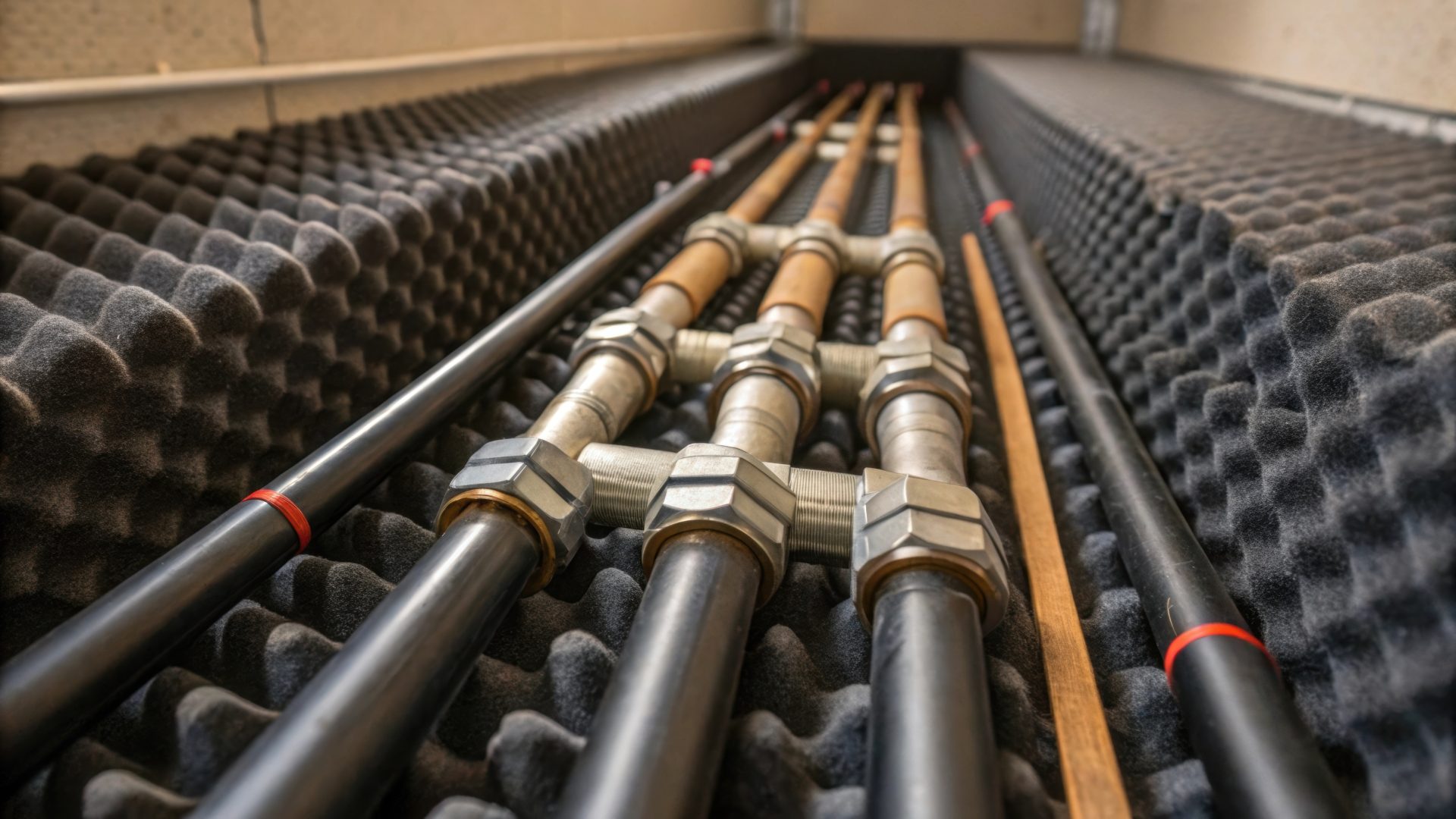
Vibration isolation proves equally crucial, as many industrial noise problems stem from structural transmission of mechanical vibrations. When equipment vibrations transfer through mounting points into building structures, they can turn entire walls and floors into giant speakers that radiate noise throughout the facility. The acoustic properties of these structural elements can significantly amplify unwanted sound transmission. Implementing proper isolation pads, spring mounts, or pneumatic isolators can dramatically reduce this structure-borne noise transmission.
Additionally, regular maintenance programs that address worn bearings, misaligned components, and loose connections can prevent many noise problems from developing or worsening over time.
Advanced Acoustic Engineering Approaches
Modern industrial acoustic management extends beyond basic absorption and source control into sophisticated engineering solutions.
Active noise control systems, while complex and expensive, can provide remarkable results in specific applications. They use microphones to detect unwanted noise and generate precise anti-phase sound waves that cancel the original noise through destructive interference. Although typically reserved for specialized applications like HVAC ducts or specific workstations, such systems can achieve noise reductions impossible through passive means alone.
Architectural modifications also play a critical role in comprehensive acoustic improvement. Installing sound barriers or partial enclosures around particularly noisy equipment can create quieter zones for the workers while maintaining necessary access and visibility. Special attention must be paid to parallel surfaces, which can create problematic standing wave patterns that amplify certain frequencies.
Moreover, the strategic use of office pods or acoustic refuges within larger industrial spaces provides workers with areas for communication, paperwork, or brief respite from high-noise environments.
Implementation and Measurement Strategies
Successful acoustic improvement in industrial spaces requires systematic measurement and implementation approaches.
Professional acoustic assessments should establish baseline conditions and identify the primary noise sources and transmission paths before implementing solutions.
Considerations for the listening position of workers during these assessments ensure that measurements reflect actual working conditions rather than arbitrary locations.
This data-driven approach ensures that acoustic treatments target the most problematic frequencies and locations, maximizing the return on investment in acoustic improvements.
Understanding sound frequency characteristics becomes significant when selecting appropriate treatments, as different materials and configurations perform optimally at specific frequency ranges. Reflective surfaces such as concrete floors and metal walls can be strategically treated with sound absorbers to prevent excessive reverberation.
Particular attention should be given to rear walls and other boundaries that can create strong reflections back toward work areas, potentially compromising sound quality and communication effectiveness.
Post-implementation measurement validates the effectiveness of acoustic treatments and identifies any remaining problem areas. Regular acoustic monitoring can also detect changes in equipment condition or new noise sources before they become significant problems.
Meanwhile, training facility personnel to recognize and report acoustic issues creates an ongoing feedback system that maintains acoustic performance over time.
Documentation of acoustic improvements also supports compliance with occupational health and safety regulations while demonstrating the organization’s commitment to worker welfare.
Conclusion
While the initial investment in acoustic improvements may seem substantial, the long-term benefits in reduced hearing damage claims, improved worker retention, enhanced communication efficiency, and overall operational excellence make acoustic management an essential component of modern industrial facility design. The question isn’t whether industrial facilities can afford to improve their acoustics—it’s whether they can afford not to address this critical aspect of worker welfare and operational efficiency.